From Protection to Trust: A New Approach to Mosque Security
The safety and security of British Muslims has become one of the most pressing public policy challenges facing the country. Across Britain,...
Read more

Author: Amaan Qureshi
Published on: February 15, 2026
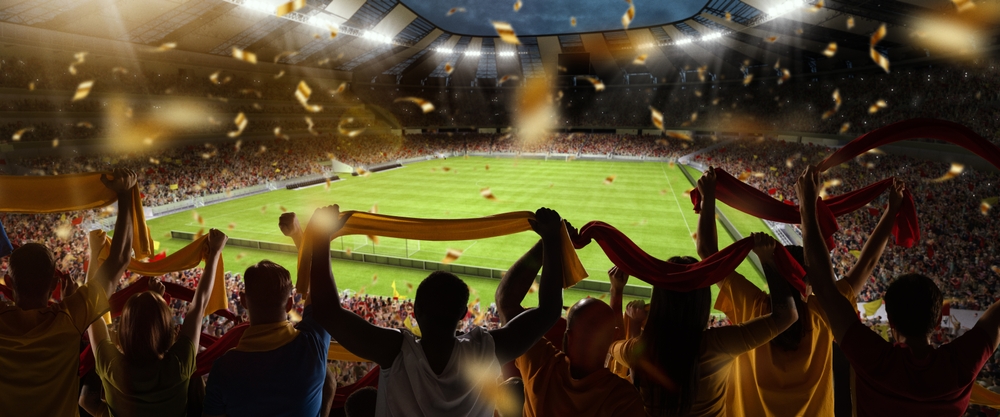
Football is one of Britain’s strongest engines of belonging. Anyone who has stood on the terraces or watched a match with friends knows the feeling: for 90 minutes, the usual dividing lines soften. Strangers stand shoulder to shoulder, sharing joy, frustration and hope. Even rivalry carries its own camaraderie. In a country where many divisions remain unresolved, that shared civic space is precious and worth protecting.
This is why the words of football’s leaders matter. This week, Manchester United co‑owner Sir Jim Ratcliffe claimed the UK was being “colonised” by immigrants, citing figures that are widely contested. He later apologised for his “choice of language” while maintaining his broader argument. The issue is not simply that offence was caused. It is the framing. Calling migrants “colonisers” is not a harmless contribution to fair policy debate. Rather, it recasts neighbours and fellow citizens as a threat, using language long associated with the far right.
Supporters understood the stakes immediately. The Manchester United Supporters Trust emphasised that club owners are custodians of one of Britain’s most globally recognised cultural institutions. With that comes responsibility: to unite supporters, not marginalise their own players, workforce or fanbase. The Manchester United Muslim Supporters Club put it plainly: the term “colonised” is not neutral, and rhetoric like this risks legitimising prejudice and deepening division. Words at the top do not stay at the top; they shape what becomes acceptable on the terraces, online, at work and at the school gates.
Debates about immigration and integration are important in a multicultural society like the UK. However, a mature discussion benefits from being grounded in respect, credible data and honesty. It depends on responsible language, especially from those with national platforms. Football’s custodians should lower the temperature, not amplify polarisation.
Clubs are not ordinary businesses. They are civic institutions, community anchors and major drivers of Britain’s global cultural influence. The Premier League is built on international talent and sustained by global audiences. It generates £10 billion for the UK economy and thrives because of migration – on the pitch, in the stands and across its workforce. Manchester United’s first team alone includes 16 nationalities, with foreign players making up around three-quarters of the squad. The club has official supporters’ groups in 94 countries. Diversity is not incidental to football’s success, but the reason for it.
This is why policy must catch up. The welcome move toward an Independent Football Regulator cannot be treated as a narrow technical exercise. Social cohesion should be a golden thread in how our cultural institutions are governed. That means cohesion must sit explicitly within the criteria for “fit and proper ownership” and within how regulators judge conduct, credibility and suitability to steward institutions that shape national identity.
The Prime Minister’s swift condemnation and the FA’s decision to review Ratcliffe’s remarks show this reality is increasingly understood. Whatever the outcome, policymakers must support stronger expectations of ethical leadership, empowering regulators to prioritise the long‑term public good over short‑term commercial considerations. “Fit and proper” cannot mean only financially capable. It must also mean fit to steward institutions that shape social norms and national belonging.
Equi’s Britain United report makes clear that tackling hatred and protecting dignity are foundational to a confident, cohesive and prosperous country. Football shows how this works in practice. A Cambridge study on the “Salah effect” found measurable reductions in anti‑Muslim prejudice linked to Mohamed Salah’s presence at Liverpool. Across the game, practical inclusion, from Ramadan accommodations to multi‑faith spaces, has strengthened the threads of our shared identity. These steps may seem small, but together they show how cultural institutions can reinforce belonging.
The policy implication is clear: the Independent Football Regulator should explicitly recognise that responsible ownership includes protecting social cohesion. Conduct that undermines a club’s social licence, including rhetoric that erodes the safety and belonging of sections of both players and the fanbase, should weigh directly in assessments of suitability and integrity. Clubs should reflect this through clear expectations for owners and executives, structured engagement with supporter groups, and credible accountability when lines are crossed.
Football can remain one of Britain’s most powerful anchors of belonging and shared identity. But that depends on leaders who understand the privilege of custodianship, and on regulation that treats social cohesion as central to the governance of our national institutions, not an optional extra.
Amaan Qureshi is the Chief Operating Officer at Equi.
The views expressed in Equi Comments pieces reflect the author’s perspective and do not necessarily represent the views of Equi. We provide this platform to encourage dialogue on broad themes related to our work, from diverse perspectives.
Stay updated on relevant topics, expert opinions, and the latest trends in the industry.