British Muslims Already Pay a Wealth Tax. Here’s How it Can Help Society
Tax justice campaigners have long argued for the taxation of wealth. British Muslim communities already pay a faith-based duty on...
Read more

Author: Lucy Bushill-Matthews
Published on: May 15, 2026
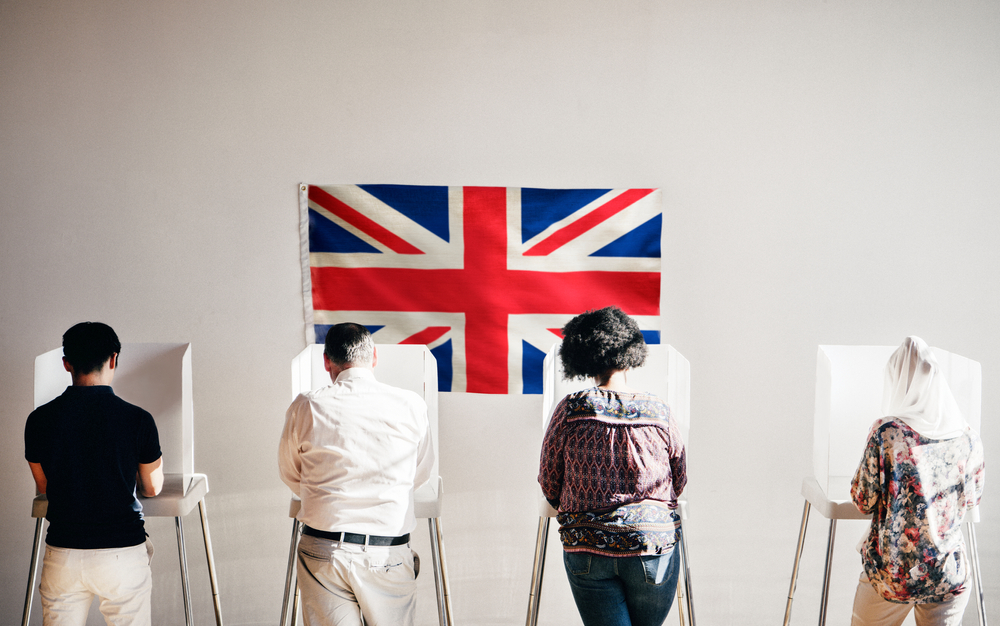
Much of the commentary following May’s local elections has reached, once again, for the familiar story of the “Muslim vote”. According to this narrative, Muslim voters behaved as a bloc, driven primarily by identity and separate from normal democratic voting behaviour. Yet the evidence suggests a more complex picture. Policymakers should resist simplistic explanations and instead focus on the real issues that are driving political fragmentation across the country.
For many commentators, the conclusion seemed obvious: Labour’s poor performance was driven by the “Muslim vote”. Some voices on the right framed this as evidence of ‘sectarian voting’ by a community supposedly prioritising foreign policy in the Middle East over local concerns. Some on the left interpreted the same results as a long‑overdue political awakening after years of being taken for granted. Despite their differences, both readings rest on the same flawed premise: that British Muslims vote in an unusual way.
The evidence from major survey agencies tells a different story – the public’s top concerns are consistent: the cost of living, the NHS, crime and policing, and local services such as roads. This holds true for Labour, Conservative, Liberal Democrat and Green voters. Only Reform voters diverge, placing immigration first.
Muslim voters fit squarely within this national pattern. Savanta polling found four of the top five issues for British Muslims were identical to those of the wider electorate: the NHS, cost of living, the economy and housing. Another poll showed the same: concerns about the economy, education, welfare and living standards mirrored those of the general population. So while Gaza matters deeply to many Muslim voters, it does so alongside many of the same economic and social concerns shaping the wider electorate.
Much of the wider electorate shares similar views with Muslims on the ceasefire in Gaza. YouGov polling has consistently shown that large majorities of the British public supported an immediate ceasefire in Gaza: 71% in December 2023, rising to 73% by May 2024. Other polls show similar results. The difference, then, is not in what Muslim voters think about the conflict, but in how much weight was placed on ongoing elements of concern related to Gaza at the ballot box.
It is usual for different people to place greater emphasis on issues they experience as morally urgent or more closely connected to their lives and identities. Many pensioners prioritise winter fuel. Many Jewish voters report high concern about antisemitism, a concern shared by many others. Many voters care deeply about inheritance tax, including farmers. Some voters place greater emphasis on assisted dying and abortion. Recent Opinium polling showed British Muslims expressing support for democracy and equal treatment under the law at even higher rates than the general public. Where the data shows many Muslim voters placing greater priority on the Middle East – alongside other voters concerned about civilian suffering – as well as on anti-Muslim hostility, this reflects the same democratic pattern. It is not an exceptional case.
The vast majority of voters, Muslim and the wider electorate alike, share the same everyday concerns about the cost of living, underfunded schools and hospitals, and rising anxiety about crime.
Labour’s results were poor across the country. But attributing this to one community based on myth rather than evidence is both inaccurate and politically unhelpful. From Tameside and Blackburn to Birmingham, Hackney and Newham, the drivers of voting behaviour overlap far more than the headlines suggest.
The message to government is clear: people do not feel listened to, and they feel under pressure in an environment where costs are rising faster than incomes. Treating Muslim voters as a special case distracts from the real issues. The data points to a single, national action plan: address the cost of living with credibility; deliver visible improvements in the NHS; repair local services; and have a uniting vision for the country which includes treating all communities with consistency and respect, rather than fuelling division.
This is the response that speaks to the Sunderland voter who turned to Reform, the Hackney voter who chose Green and the Newham voter who backed an independent. British policymaking in 2026 does not require three separate strategies. It requires one strategy, grounded in evidence, that benefits everyone.
Local elections rarely produce a clean mandate, but this year’s results are clearer than they look. Voters across communities want the cost of living brought under control and public services that work. Increasing numbers have stopped waiting for the traditional main parties to deliver either.
The strategic mistake would be to misread this shift and to treat Muslim voters as politically exceptional rather than part of the same national story. Whilst different people naturally prioritise issues differently, they are responding to the same economic, social and moral pressures shaping voting behaviour across Britain.
Lucy Bushill-Matthews is an Associate at Equi.
The views expressed in Equi Comments pieces reflect the author’s perspective and do not necessarily represent the views of Equi. We provide this platform to encourage dialogue on broad themes related to our work, from diverse perspectives.
Stay updated on relevant topics, expert opinions, and the latest trends in the industry.