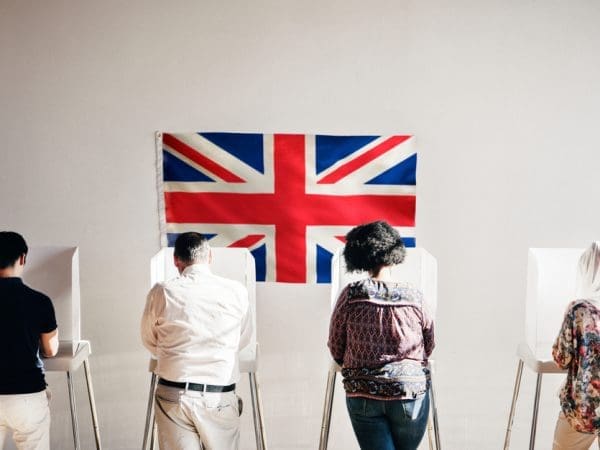
The Myth of the Muslim Bloc Vote
Much of the commentary following May’s local elections has reached, once again, for the familiar story of the “Muslim vote”....
Read more

Author: Prof. Tahir Abbas
Published on: March 23, 2026
Recent viral videos manipulate official data to dangerously frame British Muslims as an economic burden and societal threat. In deliberately stripping away crucial socioeconomic context, online far-right propagandists weaponise statistics to manufacture fear. The message is familiar: Muslims are a burden, a threat, and somehow outside the national mainstream. The way statistics can be stripped of context and rearranged for effect turns them into a tool to harden prejudice. The true reality of a Muslim community deeply engaged in and committed to British society is different.
That matters because this is about more than one misleading video. When public debate treats statistics as weapons rather than tools of understanding, structural disadvantage can be recast as inherent failure. A gap in employment becomes proof of cultural deficiency. A disparity in prison numbers becomes a cue for suspicion. Official data is made to do political work it was never designed to do.
Take the economic claims. Figures on education, employment and economic inactivity are presented as if they speak for themselves. They do not. Thoughtful analysis asks why some groups are over-represented in poorer areas, why labour market outcomes differ and how discrimination, geography and unequal opportunity shape the picture. Remove that context and the public is no longer being informed. It is being nudged towards a conclusion.
From there, the framing shifts from deprivation to danger. A prison statistic is isolated, highlighted, and placed next to references to the Home Office and MI5, inviting viewers to draw sweeping conclusions about an entire community. Debate about crime, extremism and public safety is legitimate. Smearing millions of citizens by implication is not. Once official-looking data is used in this way, the line between analysis and agitation starts to disappear.
A fuller body of evidence gives a vastly different picture. Independent polling for the Concordia Forum found that 83% of British Muslims are concerned about grooming gangs, while 61% believe victims need more support. So, when this issue is used to imply indifference or communal complicity, the evidence points in the opposite direction. What we see instead is a serious concern for justice that is much closer to the wider public mood than the caricature allows.
The evidence also speaks against the lazy language of self-segregation. Nearly half of British Muslims reported having experienced religious discrimination, 61% said discrimination against Muslims is common, and many still regarded the UK as a better place to be Muslim than the European countries they were asked about. That is not the profile of a community turning away from Britain. The same Opinium poll for Concordia found that British Muslims are more loyal to the country than the general public. Far from describing a population withdrawing from national life, the evidence points to one that wants fairness, safety, and a real stake in shaping a prosperous future for Britain.
In a similar vein, latest polling on the Iran-Israel-US conflict is being used to suggest that British Muslims sit wholly outside the national mainstream. But the wider public itself is cautious about escalation. Nearly half oppose the UK joining the strikes on Iran; only 18% support it, and the most popular positions are neutrality or diplomatic-only backing. Even attitudes towards the United States are hardly uniformly warm across the country, with only 23% of the wider public holding a favourable view. Selective presentation can take a complicated public mood and recast it as a story of Muslim exceptionalism. That is not rigorous analysis. It is narrative construction.
This is why standards and context matter. Data can help us understand social problems, target support, and improve policy. It can also be used to flatten reality, erase cause, and turn fellow citizens into suspects. In an age of viral clips and pseudo-official graphics, this is no longer only a media problem. It is a social cohesion problem. If misleading narratives are allowed to circulate unchecked, they damage trust, deepen alienation, and make serious policymaking harder.
The response should be practical. Those publishing polling or official figures should present methodology, denominators, and social context clearly. Commentators and media outlets should distinguish between disparity and culpability and between legitimate scrutiny and collective blame. Government, too, should treat growing levels of anti-Muslim misinformation as part of the wider challenge to maintaining standards in public life, because cohesion cannot be rebuilt while whole communities are repeatedly framed through suspicion.
Britain deserves better than arguments built on sand. A debate that is honest about hard problems, serious about evidence, and responsible enough not to manufacture enemies from statistics. In a healthy democracy data should help us see one another more clearly. It should not be used to turn neighbours into threats.
Prof. Tahir Abbas is Professor of Criminology and Global Justice at Aston University, specialising in social exclusion and radicalisation, with nearly 30 years of academic experience.
The views expressed in Equi Comments pieces reflect the author’s perspective and do not necessarily represent the views of Equi. We provide this platform to encourage dialogue on broad themes related to our work, from diverse perspectives.
Stay updated on relevant topics, expert opinions, and the latest trends in the industry.