Hope, Humanity and the Common Good
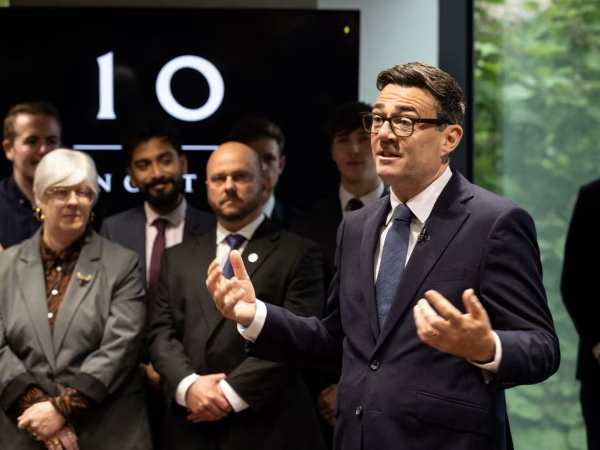
There was something significant about the tone of Andy Burnham’s first Labour conference speech as Prime Minister. It was ambitious...
Read more

Author: Dr Jennifer Philippa Eggert
Published on: October 5, 2026

Equi’s research over the past two years has regularly highlighted the need for greater faith literacy in public policy making. The key thrust has been that policy which builds on a considered understanding of faith and its role in modern British society leads to better outcomes, for all. It can help create a better Britain – one that is fairer, more inclusive and one that makes the most of what its diverse communities have to offer.
Since Equi started publishing its work two years ago, 11 government and opposition policy drives have matched recommendations within its 15 reports. Eight are already being delivered. That’s a lot for a think tank that didn’t even exist in 2023.
However, is it right to focus on faith and faith communities as a public policy think tank? Should we bring ‘religion into politics’?
Scepticism towards faith in public debates is not new. Over 20 years ago, Alastair Campbell, then Director of Communications and Strategy to Prime Minister Tony Blair, was quoted as saying, “We don’t do God”. The sentiment has stuck, even though we have seen many British senior politicians of faith, be it Christian, Jewish, Hindu or, more recently, Muslim, to name just a few. Only last month, ironically at a Tony Blair Institute event at Labour Party conference, Home Secretary Shabana Mahmood said she is accountable for her decisions “not just to parliament, but in the end to the God that has made me”.
The reality is, no matter what our personal thoughts on religion may be, it remains an important factor for a significant number of people in the UK. In the 2021 Census, 56% of the population of England and Wales identified with a religion. Research published by King’s College London showed that just under half of Britons said they believed in God. While overall, the number of believers might be on the decline, that’s still a significant number of people to whom faith matters.
But it’s not just about personal faith. Britain’s religious communities make significant contributions to the country, for the good of all. Equi’s research shows that faith and faith communities have a consistent, strong impact on British society. For example, four in five young people use faith or quiet reflection to cope with stress. This is true across all faiths. New, innovative approaches to ethical finance, informed by faith principles, could deliver £2.5 billion a year in savings and income for the UK. This is more than the £2.3 billion expected from the Australia trade deal. Better mental health, a more prosperous country- that’s real impact, delivered in collaboration with Britain’s diverse faith communities.
Looking at these numbers and facts, maybe the question isn’t so much if we “do God” or should we “bring religion into politics”. Maybe the real question at stake is are we ready to look at what matters for communities across the country and what can they deliver for the benefit of all. Politics should be informed by what matters to the people that make up our country. So, if half of all Britons say that religion matters to them, can we really afford to overlook that?
Dr Jennifer Philippa Eggert is Head of Research at Equi.
The views expressed in Equi Comments pieces reflect the author’s perspective and do not necessarily represent the views of Equi. We provide this platform to encourage dialogue on broad themes related to our work, from diverse perspectives.
Stay updated on relevant topics, expert opinions, and the latest trends in the industry.